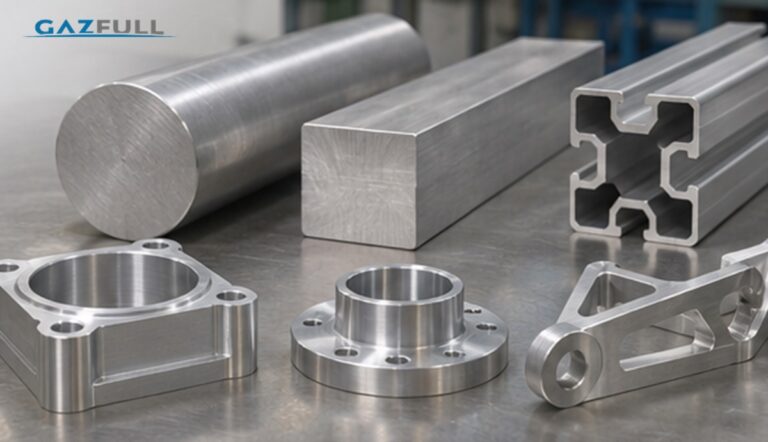
Selecting between 303, 304, and 316L stainless steel for custom CNC machining directly controls your part’s cycle time, corrosion lifespan, weldability, and unit price. Although all three belong to the austenitic 300-series stainless steel family and look virtually identical on a workbench, their machinability ratings vary by more than 2× on our CNC spindles in China. Over-specifying 316L for a dry indoor robotics shaft needlessly inflates machining cost by 40% to 70%, while specifying free-machining 303 for a welded marine manifold leads to weld cracking and premature salt-spray pitting. In this shop-floor engineering guide, we compare 303, 304, and 316L stainless steel across chemistry, work-hardening behavior, passivation, thread galling, and real CNC cost.
Quick Engineering Comparison: 303 vs. 304 vs. 316L Stainless Steel
At a high level, 303 stainless steel is the highest-speed, lowest-cost machinable grade for non-welded shafts, bushings, and indoor fittings; 304 stainless steel is the versatile weldable baseline for general industrial, food-contact, and structural hardware; and 316L stainless steel adds 2%–3% molybdenum and low carbon for superior resistance to chlorides, saline, acids, and medical sterilization.
| Engineering Factor | 303 Stainless Steel | 304 / 304L Stainless | 316L Stainless Steel |
|---|---|---|---|
| Key Alloying Addition | 18% Cr, 8% Ni + Sulfur (≥0.15%) | 18% Cr, 8% Ni (standard austenitic) | 16–18% Cr, 10–14% Ni + 2–3% Molybdenum |
| Machinability Rating | ~78% (Free-machining, crisp chips) | ~45% (Gummy, work-hardens) | ~36% (Tough, high tool heat) |
| Corrosion Resistance | Good (dry indoor / mild moisture) | Very Good (general outdoor / food) | Excellent (chlorides, saline, medical, marine) |
| Weldability | Poor (sulfur causes hot cracking) | Excellent (304L prevents carbide decay) | Excellent (low carbon prevents weld decay) |
| Relative CNC Part Cost | Baseline (1.0×) | ~1.25× – 1.45× | ~1.45× – 1.80× |
| Typical CNC Applications | Turned pins, shafts, nuts, sensor collars | Brackets, flanges, food equipment, enclosures | Medical fluidics, marine valves, biotech manifolds |
1. 303 Stainless Steel: The Free-Machining Champion for Turned Parts
Aluminum 303 stainless steel is chemically based on 304 with deliberate sulfur (at least 0.15%) added to create microscopic manganese sulfide inclusions throughout the metal matrix. During CNC turning and milling, those inclusions act as built-in chip breakers—snapping chips into short, manageable curls instead of long, razor-sharp stringers that wrap around spindles and scratch finished diameters. On our CNC Swiss turning machines, 303 stainless runs at dramatically higher surface speeds and feeds than 304 or 316L, cutting cycle time by 35% to 50% while yielding bright, smooth Ra 0.8–1.6 µm finishes.
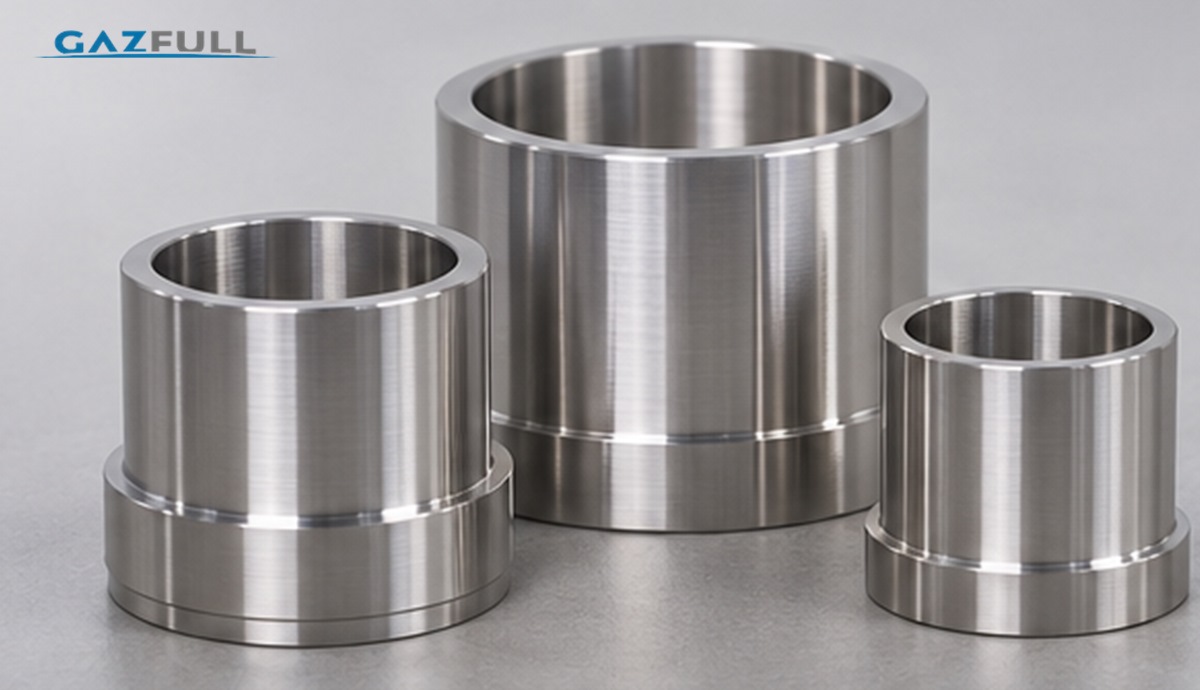
The trade-off for 303’s exceptional machinability is lower corrosion resistance and poor weldability. Those same sulfur inclusions interrupt the passive chromium-oxide surface film, making 303 vulnerable to pitting in saltwater, chloride washdowns, or acidic chemicals—and sulfur triggers hot-short cracking if TIG or MIG welded. Specify 303 stainless steel whenever your turned shafts, spacers, threaded bushings, or fasteners operate indoors without welding or harsh chemical exposure.
2. 304 / 304L Stainless Steel: The Balanced Industrial Workhorse
Grade 304 (“18/8” stainless steel) is the world’s most widely stocked austenitic stainless steel, delivering strong general corrosion resistance, food-grade hygiene, good formability, and clean weldability. When parts require structural welding without risk of intergranular corrosion in the heat-affected zone, low-carbon 304L (≤0.03% carbon) prevents chromium carbide precipitation along grain boundaries.
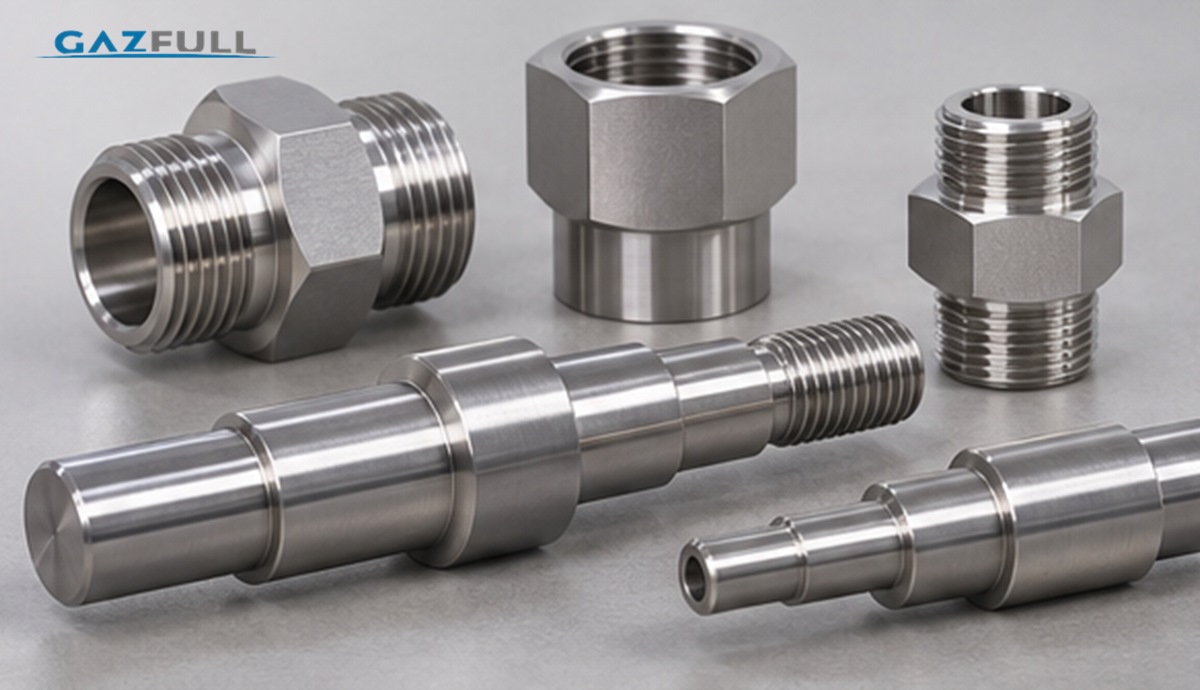
On the CNC spindle, however, 304 stainless steel demands disciplined feeds and tooling because it work-hardens rapidly. If a dull end mill or light feed rubs against 304 instead of shearing cleanly underneath the previous cut, the surface layer instantly hardens, accelerating tool wear and chattering. In our China workshop, we machine 304 using rigid toolholders, sharp positive-rake AlTiN/TiAlN-coated carbide cutters, steady chip loads, and high-pressure flood coolant—never allowing tools to dwell in the cut.
3. 316L Stainless Steel: Built for Marine, Medical, and Chemical Service
Adding 2% to 3% molybdenum transforms 316L into the gold standard for aggressive chloride environments, coastal marine hardware, pharmaceutical processing, and medical device CNC components. Molybdenum stabilizes the passive oxide film against localized pitting and crevice corrosion caused by salt spray, saline solutions, and autoclave sterilization cycles. Because 316L combines low carbon (≤0.03%) with higher nickel content (10%–14%), it welds cleanly and maintains excellent cryogenic and elevated-temperature toughness.
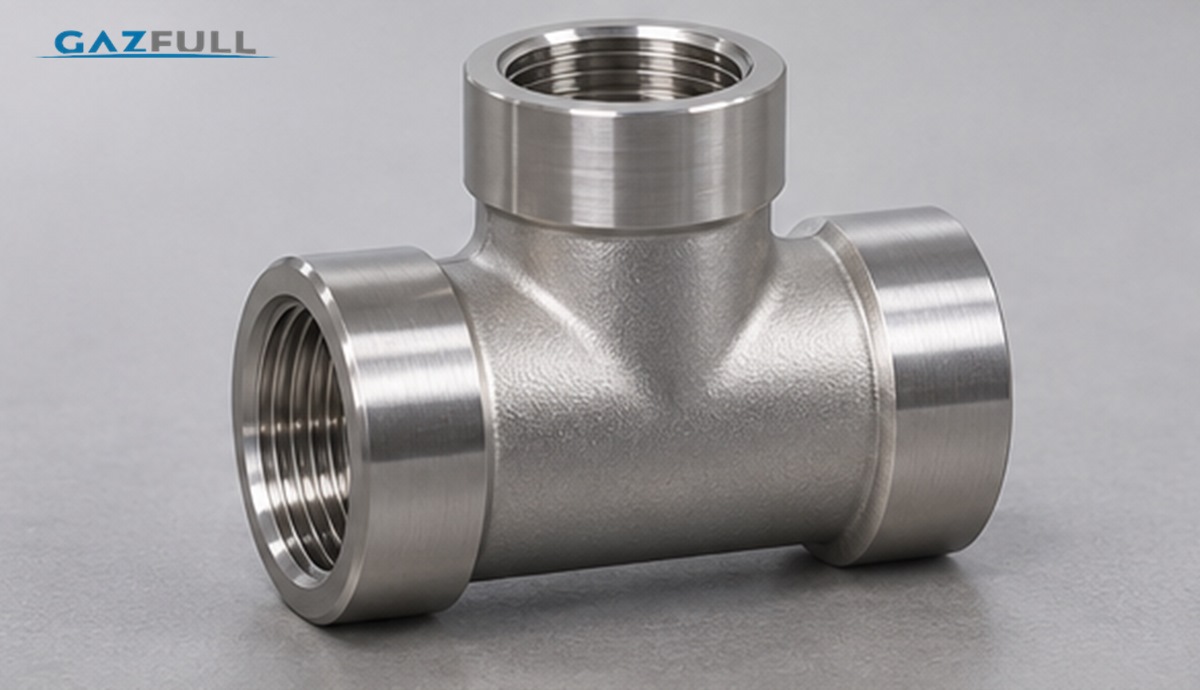
Machining 316L is the most demanding of the three grades: its low thermal conductivity concentrates cutting heat directly on the tool edge, and its high work-hardening rate reduces spindle speeds by 15% to 30% compared to 304 (and roughly 50% compared to 303). Combined with higher raw nickel/molybdenum alloy surcharges, finished 316L fluidic manifolds and shafts typically cost 45% to 80% more than identical parts in 303. When your application genuinely involves saline, acids, marine air, or biotech fluidics, 316L is non-negotiable; when it does not, stepping down to 304 or 303 saves substantial budget.
4. ASTM A967 Passivation, Thread Galling, and When to Upgrade to 17-4PH
Even genuine 316L stainless steel can show surface “tea-staining” rust after machining if microscopic free-iron particles from cutting tools or steel workholding embed into the surface. To guarantee maximum corrosion resistance on our stainless steel CNC machining orders, we recommend ASTM A967 citric or nitric acid passivation, which dissolves embedded free iron without altering part dimensions while thickening the protective chromium-oxide layer.
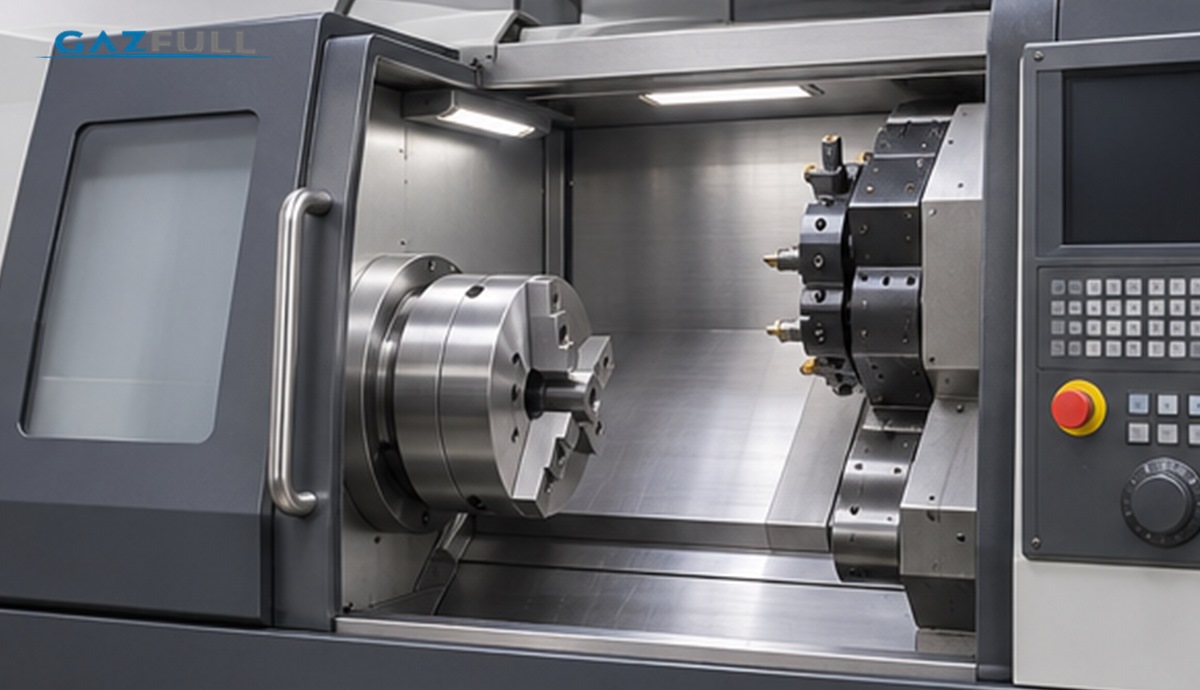
Engineers designing stainless assemblies must also guard against thread galling (cold welding). When a 304 or 316L stainless bolt is tightened quickly into a matching 304 or 316L tapped hole, friction shears the oxide layer and welds the mating threads solid. To prevent galling, specify clean thread-milled Class 6H/2B fits, apply anti-seize during assembly, or pair austenitic housings with hardened 17-4PH precipitation-hardening stainless steel shafts or fasteners (which reach ~40 HRC after H900 aging for superior wear and shear strength).
Frequently Asked Questions: 303 vs. 304 vs. 316L Stainless Steel
1. How much cheaper is CNC machining 303 stainless steel compared to 316L?
Because 303 machines nearly twice as fast as 316L with far lower tool wear and no molybdenum raw-material surcharge, finished CNC parts in 303 typically cost 30% to 45% less than identical geometries in 316L stainless steel.
2. Can 303 stainless steel be passivated for corrosion resistance?
Yes, 303 can be passivated using specialized citric or nitric-dichromate baths tailored for free-machining sulfur grades, though its overall pitting resistance in salt spray will still remain lower than 304 or 316L.
3. Why is 316L preferred over standard 316 for welded CNC assemblies?
The “L” in 316L stands for Low Carbon (maximum 0.03% carbon vs. 0.08% in 316). Lower carbon prevents chromium carbide precipitation along weld heat-affected zones, preserving corrosion resistance without requiring post-weld solution annealing.
4. Are 303, 304, and 316L stainless steels magnetic?
In their fully annealed bar/plate condition, 303, 304, and 316L are essentially non-magnetic austenitic alloys. However, heavy cold drawing or aggressive CNC machining can induce slight localized magnetism in 303 and 304, whereas 316L remains the least magnetic due to higher nickel content.
5. What tolerances can Gazfull hold on stainless steel CNC parts?
Our standard tolerance is ISO 2768-f (±0.025 mm), and we routinely hold ±0.005 mm on precision bearing journals, Swiss-turned shafts, and CMM-verified mating bores across 303, 304, 316L, and 17-4PH stainless steel.
6. Do you provide 3.1 material mill certificates for 316L stainless orders?
Yes. Upon request at RFQ, we supply EN 10204 3.1 Material Test Reports (MTRs) verifying exact chemical composition (including molybdenum percentage), heat-lot traceability, and mechanical properties alongside CMM dimensional reports.
Need Precision 303, 304, or 316L Stainless Steel CNC Parts?
Send your 3D CAD files (STEP, IGES, X_T) and 2D PDF drawings to the Gazfull CNC engineering team today. We verify grade suitability, passivation requirements, and Swiss-turning vs. milling economics—delivering your quote within 24 hours.
Send CAD for a Quote Explore Stainless Steel CNC Machining →