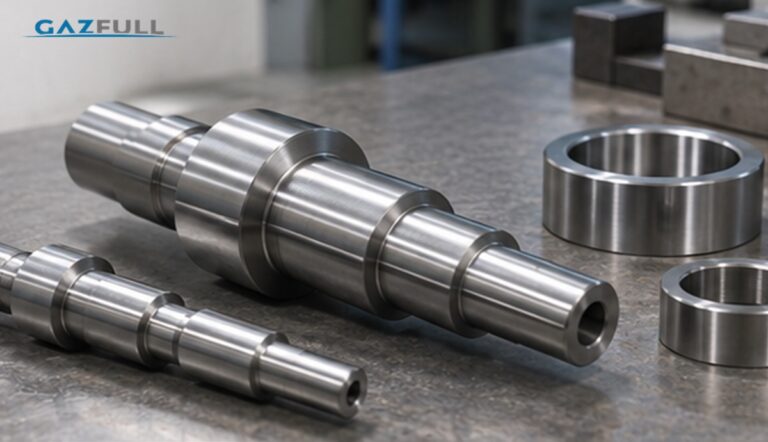
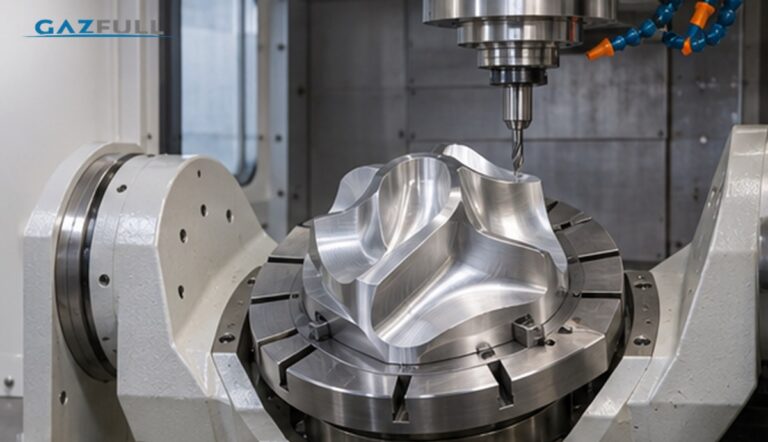
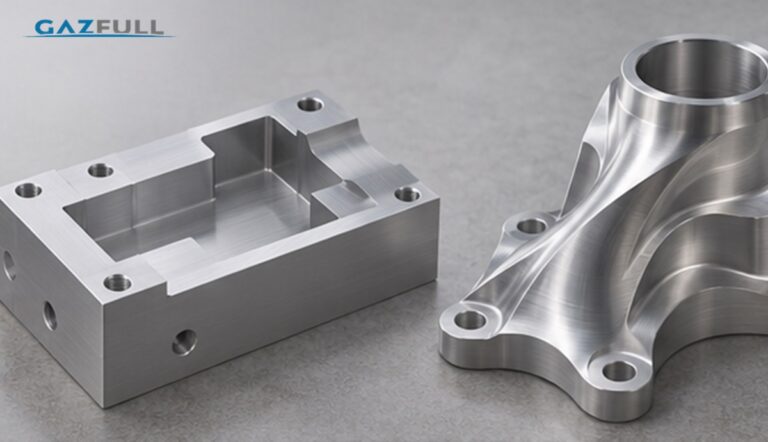
Machining a long, slender metal shaft with tight concentricity exposes the fundamental mechanical difference between a CNC Swiss-type lathe and a conventional fixed-headstock CNC lathe. On a conventional lathe, a Ø6 mm stainless steel shaft sticking 60 mm out of a chuck behaves like a flexible diving board—bending away from the cutting insert, chattering, and finishing tapered. On our Star SB-20R Swiss CNC turning line in China, a precision guide bushing supports that exact same bar within 1 to 2 millimeters of the cutting edge, eliminating deflection so slender shafts with 10:1 to 25:1 length-to-diameter (L:D) ratios hold ±0.005 mm concentricity effortlessly. In this engineering guide, we explain when slender shafts, micro pins, and turned sleeves belong on a Swiss lathe versus a conventional live-tooling CNC lathe.
Quick Engineering Comparison: CNC Swiss Turning vs. Conventional CNC Lathe
Selecting the optimal turning platform comes down to four measurable geometry parameters: outer diameter (OD), length-to-diameter (L:D) ratio, secondary milling/cross-hole complexity, and batch quantity. Use the shop-floor comparison matrix below to see where each machine excels.
| Machining Parameter | CNC Swiss Turning (Sliding Headstock) | Conventional CNC Lathe (Fixed Headstock) |
|---|---|---|
| Workpiece Support | Guide bushing supports bar 1–2 mm from cutting tool | Collet or 3-jaw chuck grips rear end (+ optional tailstock) |
| Optimal Diameter Range | Ø1.0 mm to Ø32 mm (sweet spot: Ø2–Ø20 mm) | Ø15 mm to Ø300 mm+ (larger shafts, flanges, housings) |
| Max Slender L:D Ratio | 10:1 to 30:1+ without tailstock deflection | Up to 3:1–4:1 unsupported (higher needs tailstock/steady rest) |
| Concentricity / Tolerance | ±0.005 mm OD & 0.005 mm TIR over long spans | ±0.010 mm routine; tight TIR on stubby parts |
| Multi-Axis Secondary Ops | Simultaneous gang tooling + sub-spindle back-working | Sequential turret ops (or live-tool mill-turn) |
| Cutting Fluid | Neat cutting oil (superior lubricity & zero micro-rust) | Water-soluble flood coolant (higher heat dissipation) |
| Ideal Batch Quantity | 50 to 100,000+ pcs (also viable for 10+ tight slender pins) | 1-off prototypes to 5,000+ medium/large turned parts |
1. The Physics of Deflection: Why the Guide Bushing Changes Everything
In beam bending mechanics, cantilever deflection increases with the cube of unsupported length (`L³`) and inversely with the fourth power of shaft diameter (`D⁴`). Doubling the overhang of a slender Ø5 mm stainless steel pin makes it 8× more flexible under identical radial tool pressure. On a conventional CNC lathe, trying to turn a 50 mm long Ø5 mm shaft (10:1 L:D ratio) pushes the shaft away from the insert, producing a barrel-shaped or tapered diameter and poor surface roughness—even when using a tailstock center, which still allows mid-span bowing and blocks end-face drilling.
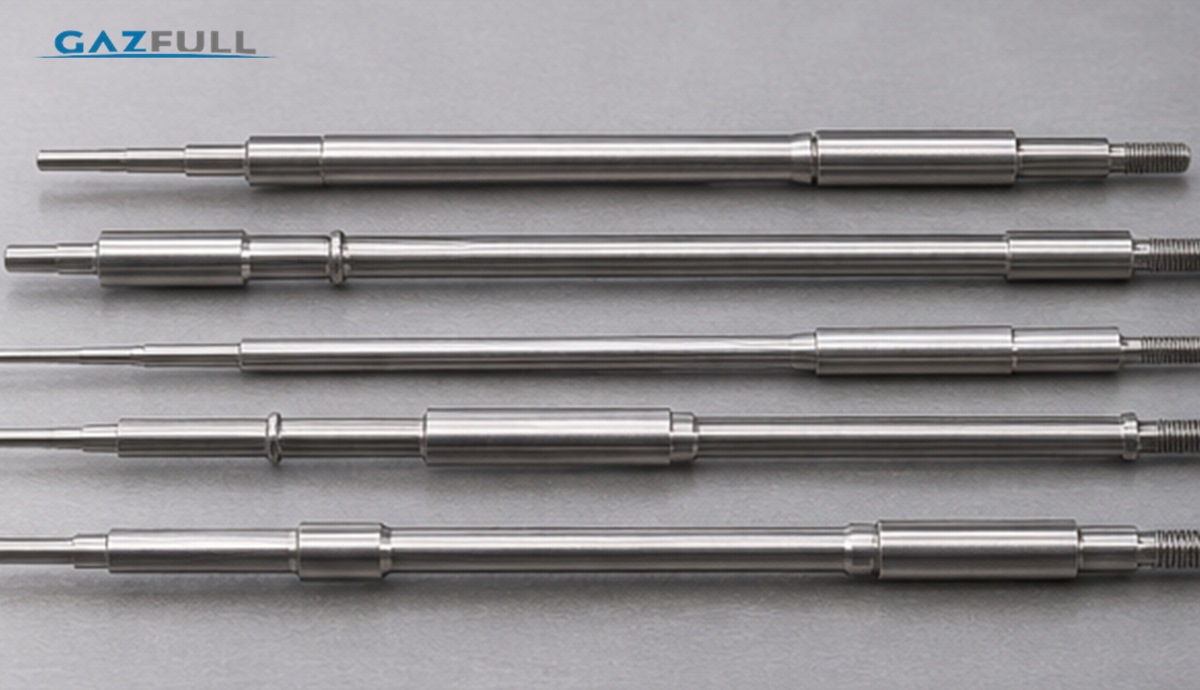
A CNC Swiss lathe flips the kinematics completely. Instead of the tool moving down a stationary overhanging bar, the headstock slides axially along the Z-axis, feeding precision-ground bar stock continuously through a tightly fitted guide bushing while gang-mounted cutting tools sit stationary within 1 to 2 mm of the bushing face. Because cutting force is always applied immediately adjacent to rigid support, a 120 mm long stepped shaft experiences virtually zero bending deflection. That mechanical advantage is why our CNC Swiss turning services routinely hold ±0.005 mm diameter tolerances and crisp Ra 0.8 µm finishes on slender precision shafts, surgical bone pins, and optical alignment plungers.
2. Sub-Spindle “Done-in-One” Efficiency vs. Conventional Mill-Turn
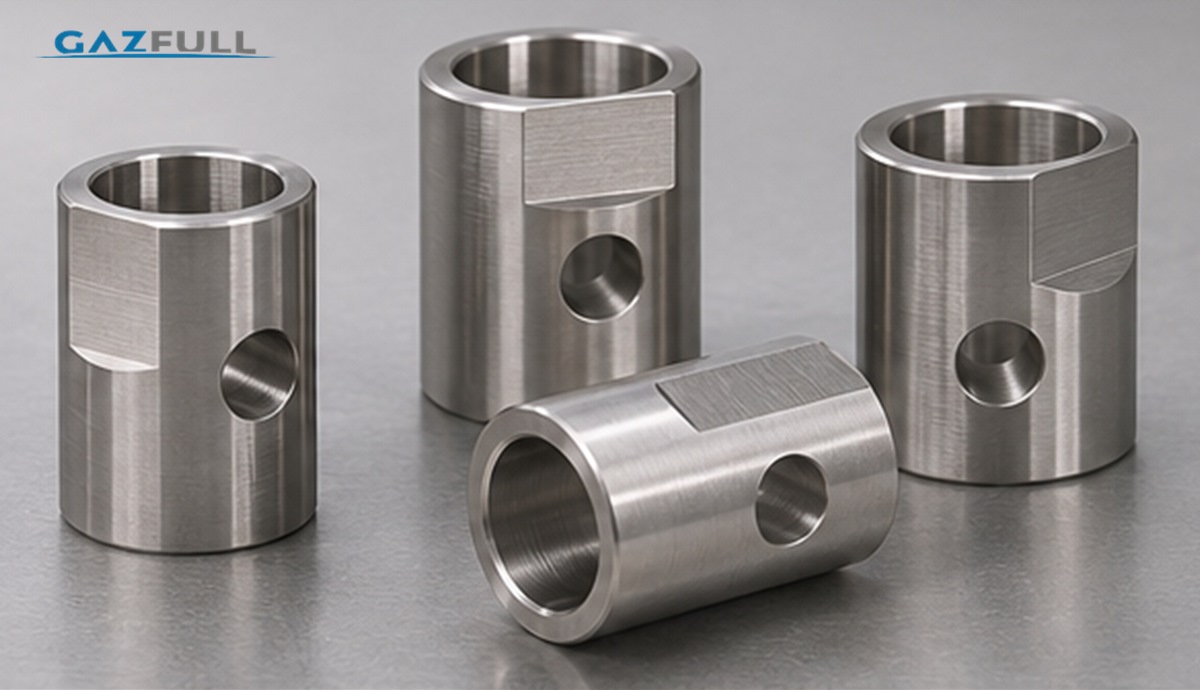
Modern Swiss CNC lathes are far more than simple shaft turners—they operate as compact 7- to 9-axis multi-tasking cells. While the main spindle turns stepped diameters, cuts external threads, and cross-drills radial ports using live milling tools, a synchronized sub-spindle picks off the part cleanly and simultaneously finishes back-end bores, internal threads, or D-flats. Finished parts drop out of the machine 100% complete—zero manual secondary milling setups, zero burrs on the cut-off face, and zero re-clamping concentricity loss.
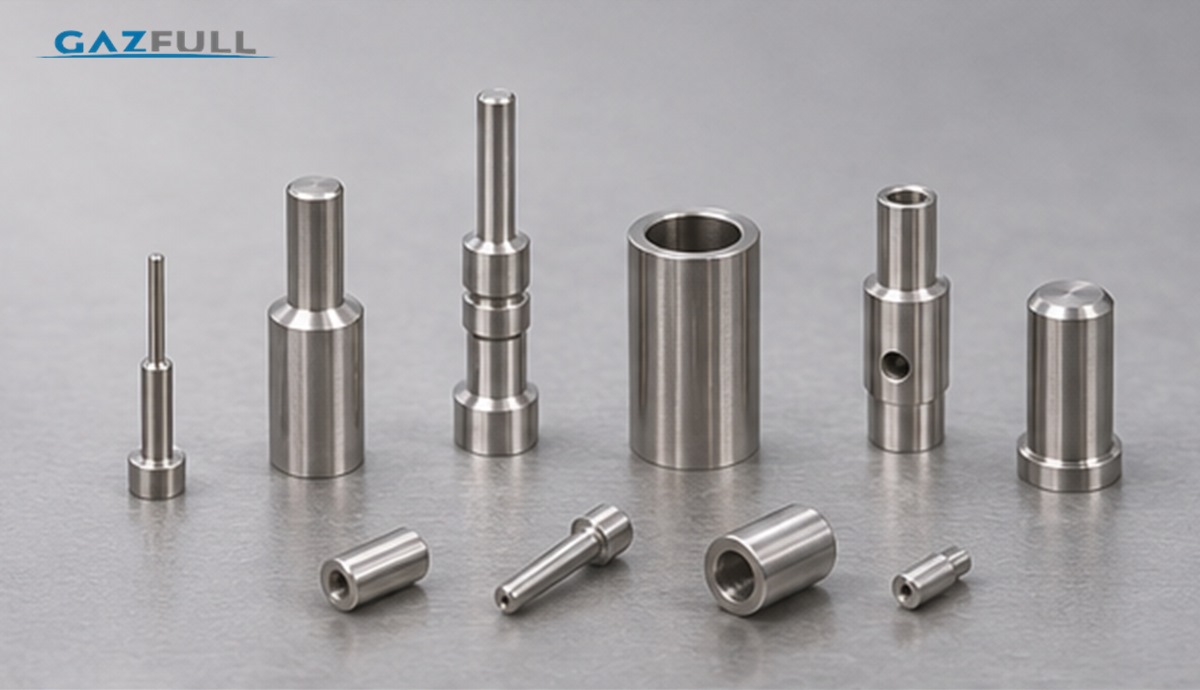
For miniature connectors, watchmaking-scale inserts, and micro CNC machined parts under Ø12 mm with cross-holes and hex flats, Swiss turning cuts cycle time by 40% to 70% compared to turning on a conventional lathe and moving to a 3-axis mill. Conversely, when a part’s diameter exceeds Ø32 mm—such as a Ø65 mm hydraulic housing, bearing flange, or heavy stepped rotor—it exceeds standard Swiss bar capacity and moves naturally to our conventional CNC turning and mill-turn centers, which offer heavier spindle torque and larger chuck envelopes.
3. Centerless-Ground Bar Stock, Remnants, and Batch Economics
One practical shop-floor factor that buyers rarely see in generic comparisons is bar stock tolerance. Because Swiss turning feeds rotating bar stock through a tight guide bushing, standard hot-rolled or rough-extruded bar with ±0.15 mm ovality will bind or chatter inside the bushing. Swiss machines require precision centerless-ground bar stock (typically h8 or h9 tolerance), which carries a modest raw material premium over standard cold-finished bar—and each 3-meter bar leaves a ~150–200 mm unmachined remnant at the end.
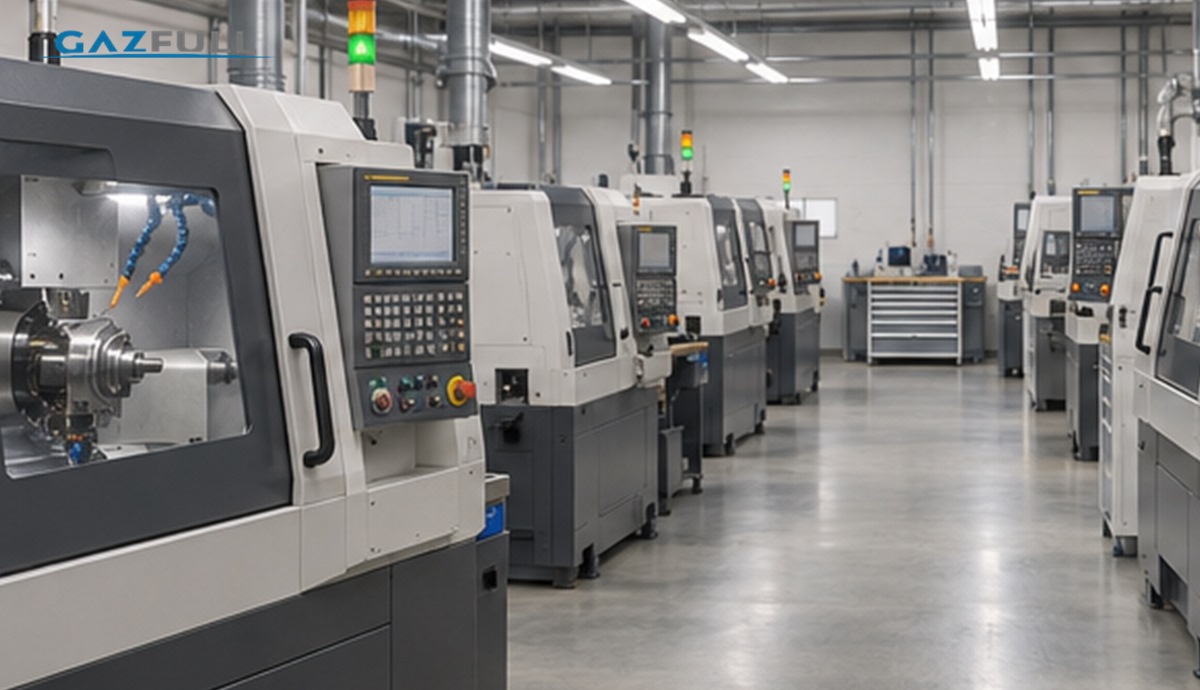
For 1 to 10 prototype pieces of a stubby, low-L:D collar (such as Ø20 mm × 25 mm long), setting up a guide bushing and bar feeder on a Swiss lathe costs more in setup time than chucking a short blank on a conventional CNC lathe. However, the moment your part is either (1) slender (L:D > 4:1) with tight concentricity or (2) ordered in batches of 50 to 50,000+ pieces, the automated bar-fed speed and single-drop completion of Swiss turning deliver dramatically lower unit cost and higher lot-to-lot consistency. You can also explore process selection across milled vs. turned geometries in our CNC milling vs. turning guide.
Frequently Asked Questions: CNC Swiss Turning vs. Conventional Lathe
1. At what length-to-diameter (L:D) ratio should I choose CNC Swiss turning?
As a reliable shop-floor rule, once a turned shaft’s length exceeds 4× its diameter (L:D > 4:1) and requires tight OD tolerances or coaxial runout control, CNC Swiss turning outperforms conventional chucking lathes by eliminating cantilever deflection and chatter.
2. What is the maximum part diameter for CNC Swiss turning?
Most precision Swiss-type lathes handle bar diameters up to Ø20 mm or Ø32 mm (with specialty heavy Swiss machines reaching Ø38 mm). Parts larger than Ø32 mm are typically machined on conventional CNC lathes or live-tooling mill-turn centers.
3. Can a Swiss CNC lathe machine flats, keyways, and cross-holes in one setup?
Yes. Our Swiss lathes feature live axial and radial milling tools plus a synchronized sub-spindle, allowing us to turn stepped diameters, mill D-flats and hexes, drill cross-holes, and tap back-end threads in a single unattended cycle.
4. Why do Swiss CNC machines use neat cutting oil instead of water-based coolant?
Neat cutting oil provides superior lubricity as precision bar stock slides continuously through the tight guide bushing, extends micro-tool life in tough stainless steel and titanium, and prevents flash rust on miniature carbon-steel or alloy-steel parts.
5. Which materials run best on CNC Swiss turning machines?
303, 304, 316L, and 17-4PH stainless steel, C360 brass, 6061/7075 aluminum, Ti-6Al-4V titanium, 4140 alloy steel, and engineering plastics like PEEK and Delrin all machine cleanly on our Swiss turning line.
6. Can I order low-volume prototypes of slender shafts on a Swiss lathe?
Yes. While Swiss turning shines in batches of 50 to 50,000+ pieces, we also run small prototype lots of 10 to 30 pieces whenever slender geometry or ±0.005 mm concentricity requires guide-bushing support.
Need Slender Precision Shafts, Pins, or Multi-Axis Turned Parts?
Send your 3D CAD models (STEP, IGES, X_T) and 2D PDF drawings to the Gazfull CNC engineering team today. We evaluate L:D ratio, bar stock sizing, and Swiss-turning vs. conventional lathe economics—returning your quote within 24 hours.