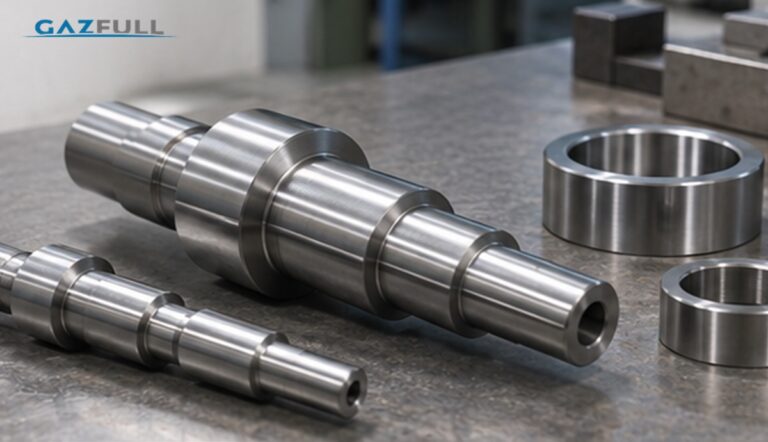
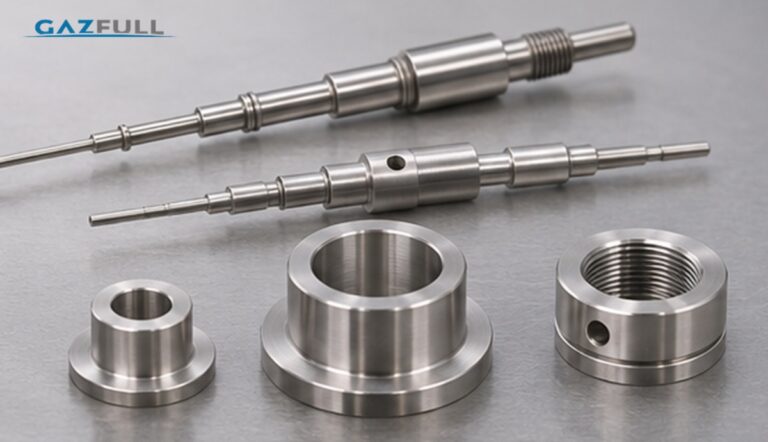
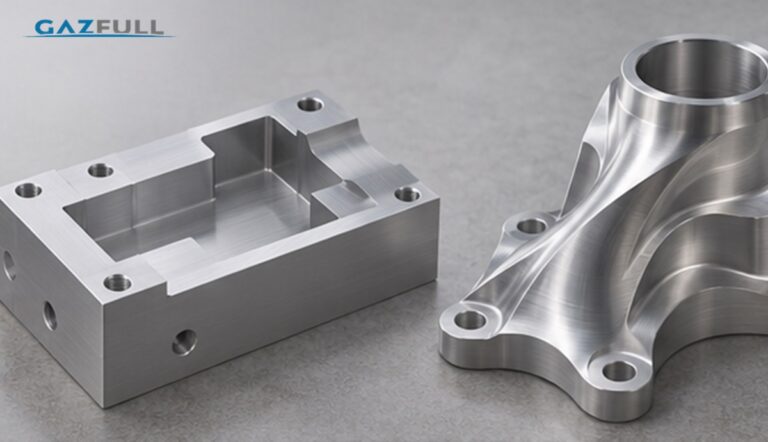
Modern robotics joints, photonics mounts, multi-port hydraulic manifolds, and aerospace impellers pack angled bores, deep pockets, and compound curves onto five or six faces of a single compact metal block. Trying to machine those multi-face parts across half a dozen manual 3-axis setups creates cumulative datum drift, expensive custom angle fixtures, and high scrap risk. In our China CNC facility, 5-axis machining—both 3+2 indexed and continuous simultaneous 5-axis—solves multi-face geometry in a single clamping while often lowering total landed unit cost. This complete guide focuses on multi-face geometry strategy, 5-axis workholding, datum architecture, and real setup economics.
1. Multi-Face Geometry: 3+2 Indexed vs. Simultaneous 5-Axis Kinematics
Understanding how 5-axis kinematics interact with your CAD geometry helps you capture single-setup accuracy without paying for unnecessary programming complexity. In 3+2 indexed 5-axis machining, the tilting trunnion table rotates the workpiece to an exact compound angle, locks its hydraulic brakes for maximum rigidity, and cuts flat faces, angled ports, and deep bores using standard high-feed end mills and drills. In simultaneous 5-axis machining, all five axes move dynamically in real time to sculpt continuously curving surfaces such as shrouded impellers, fluid guide vanes, and organic housings—tilting the ball-nose cutter off its zero-speed center tip for smoother Ra 0.8 µm finishes.
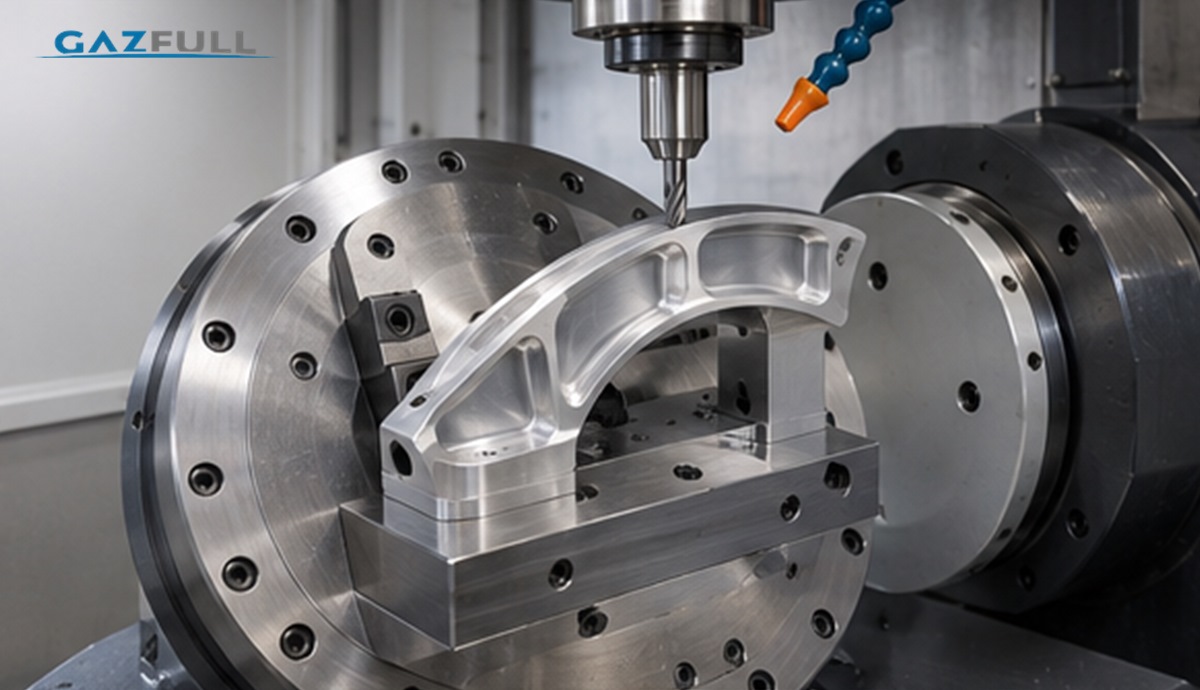
Equally valuable is tool-length reduction. Tilting a deep-walled housing directly toward the spindle lets our machinists use short, stubby carbide end mills with 4× to 8× greater bending rigidity than long-reach 3-axis tools—eliminating chatter marks and tapered walls in tough Ti-6Al-4V titanium and stainless steel. Explore our dedicated 5-axis CNC machining services to see typical part envelopes.
2. Setup Consolidation and Real 5-Axis Cost Efficiency
Although a 5-axis machining center carries a higher hourly shop rate than a 3-axis mill, total unit cost is governed by total labor + fixture cost + spindle time + scrap rate. On any part requiring 4 or more clamping orientations on a 3-axis mill, eliminating manual re-clamping and custom angle-plate fixtures routinely cuts total landed part cost by 15% to 45%.
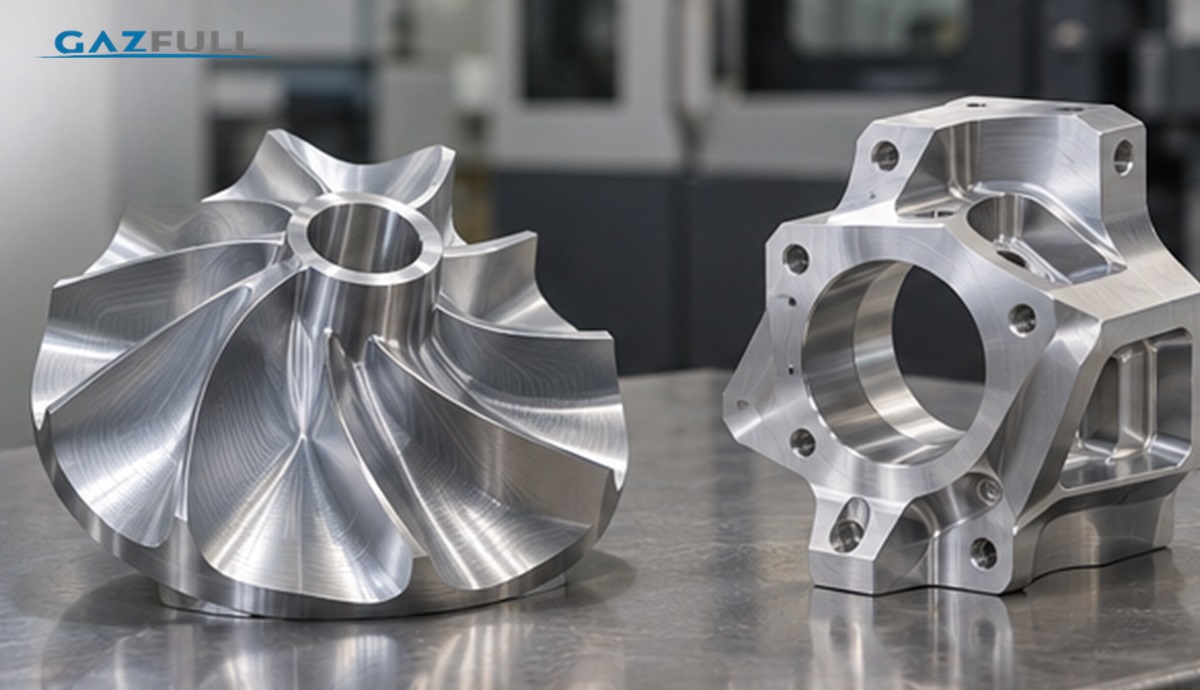
In a representative 30-piece multi-face robotics housing batch we ran in our workshop, moving from six 3-axis setups (95 minutes combined setup, cutting, and re-zeroing per piece) onto a single 5-axis trunnion setup plus a fast Op 2 bottom skim dropped total time to 38 minutes per piece while locking cross-face bore true position within 0.008 mm. For a direct head-to-head crossover analysis, see our 3-axis vs. 5-axis CNC comparison.
3. 5-Axis Workholding: Dovetail Clamping, Pull-Studs, and Op 2 Removal
Even on a 5-axis trunnion, the sixth (bottom) face must be held rigidly above the table so the spindle has unobstructed 360° clearance around all five exposed faces. Designing your part with workholding in mind keeps fixture cost near zero: leaving a flat bottom face for a 3–5 mm sacrificial dovetail clamping tab lets us grip raw billet in a standard self-centering 5-axis vise, finish all five sides in Op 1, and skim off the tab cleanly in Op 2 using contoured soft jaws.
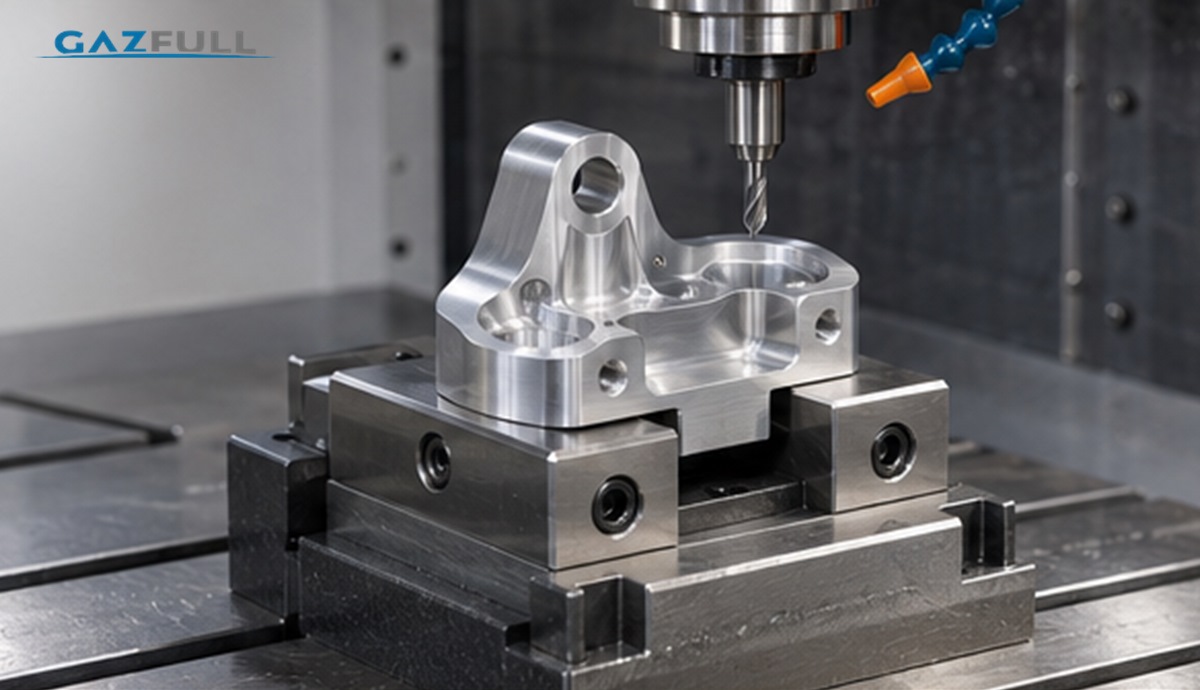
For large open rings or structural frames that already feature bottom mounting holes, bolting the part directly onto a riser plate via threaded pull-studs eliminates sacrificial stock altogether. On repeat batches of 50 to 1,000+ pieces, we deploy zero-point quick-change pallets with sub-0.005 mm repeatability so fixtures swap in under two minutes with zero re-indication.
4. Collision-Free CAM Simulation and Single-Datum CMM Verification
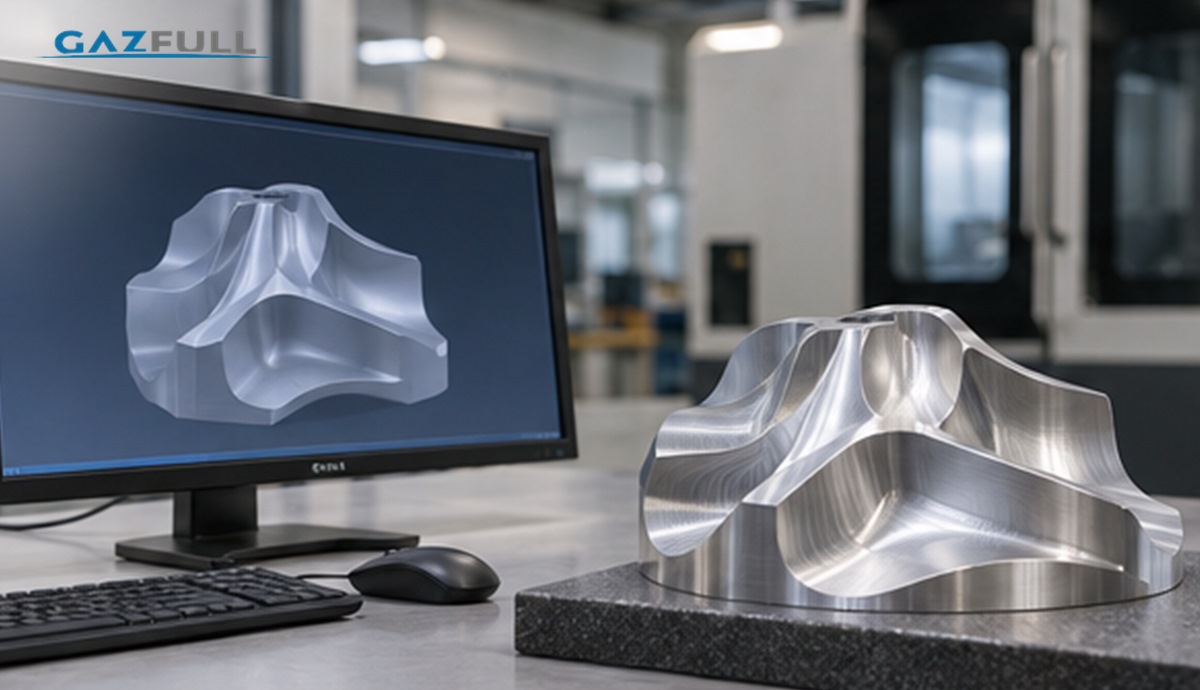
Five-axis programming demands rigorous digital verification before cutting first metal. Every 5-axis program in our China workshop runs through full kinematic machine simulation—modeling the exact spindle head, toolholder cone, vise jaws, and trunnion table—to verify zero collisions and optimal tool tilt angles. Once machined, we inspect cross-face bores, compound angles, and Datum A/B/C true position on our 20 °C bridge CMM so single-setup accuracy is backed by serialized data.
Frequently Asked Questions: 5-Axis CNC Machining
1. How many faces can a 5-axis CNC machine finish in a single setup?
A 5-axis trunnion machine accesses up to 5 faces (top plus all four sides and any compound angles between them) in one clamping; only the bottom clamping tab is removed in a fast second operation.
2. When is 3+2 indexed 5-axis better than simultaneous 5-axis?
3+2 indexed 5-axis is faster, stiffer, and more economical whenever features are planar faces, angled holes, or multi-sided pockets. Simultaneous 5-axis is reserved for continuously curving 3D contours like impellers and shrouded vanes.
3. What cross-face tolerance can 5-axis CNC machining hold?
Because all five accessible faces share one unbroken machine coordinate origin, our 5-axis centers routinely hold ±0.005 mm to ±0.015 mm true position and perpendicularity across opposing or angled faces.
4. Does 5-axis machining work for 1-off prototypes as well as production?
Yes. For complex multi-face prototypes, 5-axis avoids building expensive custom 3-axis angle fixtures—often delivering both faster prototype turnaround (4–7 days) and lower total cost.
5. How should I design CAD features to keep 5-axis costs down?
Use planar 3+2 angled pads instead of decorative freeform splines, keep internal pocket radii generous, leave adequate toolholder cone clearance around recessed angled ports, and anchor GD&T datums to the primary 5-axis setup.
6. Which materials can Gazfull machine on 5-axis centers?
We run 6061/7075 aluminum, 303/304/316L/17-4PH stainless steel, Ti-6Al-4V titanium, C360 brass, C110 copper, and engineering plastics including PEEK and Delrin on our 5-axis machines.
Have a Complex Multi-Face Part Ready for 5-Axis CNC Machining?
Send your 3D CAD models (STEP, IGES, X_T) and 2D PDF drawings to the Gazfull CNC engineering team today. We verify 3+2 vs. simultaneous 5-axis routing, dovetail workholding, and CMM datums—delivering your quote within 24 hours.