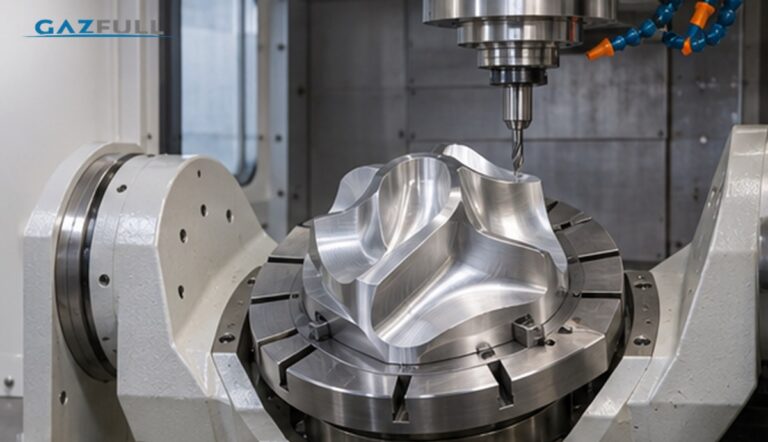
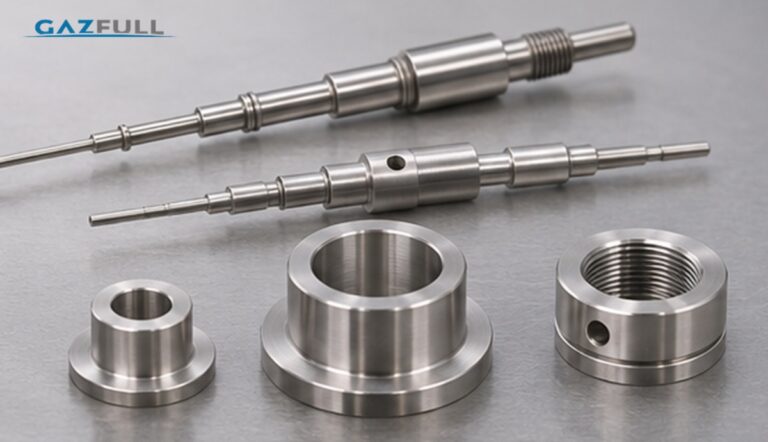
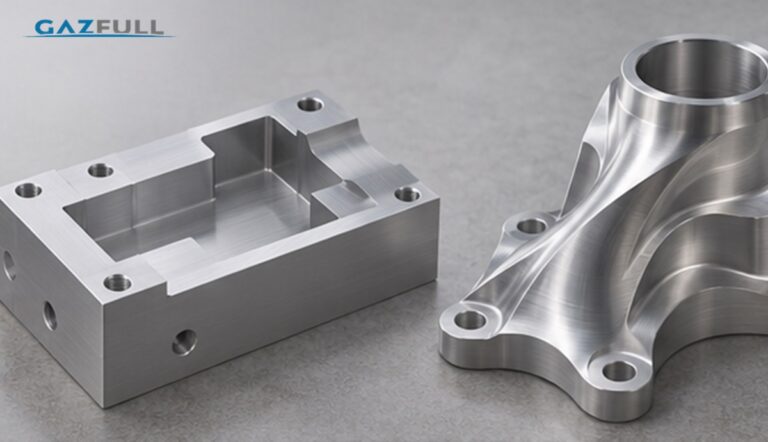
Rotating motor shafts, linear guide pins, robotics actuator spindles, and fluidic rotor shafts operate under continuous radial, axial, and torsional stress—meaning even a 0.02 mm concentricity error between bearing seats can cause noisy vibration, premature bearing failure, or dynamic oil-seal leaks. In our China CNC turning facility, we manufacture custom precision shafts ranging from Ø1.5 mm miniature Swiss-turned medical pins up to Ø150 mm hardened 4140 industrial drive shafts. This complete engineering guide covers how to choose the optimal turning process, specify coaxial GD&T tolerances and bearing fits, select the right stainless or alloy steel grade, and verify concentricity prior to shipment.
1. Selecting the Right CNC Turning Route for Your Shaft Geometry
Shaft concentricity starts with choosing a machine platform that completes as many coaxial features as possible in a single clamping. For slender cylindrical shafts under Ø32 mm whose length exceeds 4× their diameter (L:D > 4:1), CNC Swiss turning uses a precision guide bushing 1–2 mm from the cutter to eliminate bending deflection and hold 0.005 mm TIR across long stepped profiles. For medium-to-large shafts combining turned bearing journals with keyways, D-flats, splines, or radial cross-holes, live-tooling mill-turn centers finish both turned and milled features in one unbroken coordinate setup.
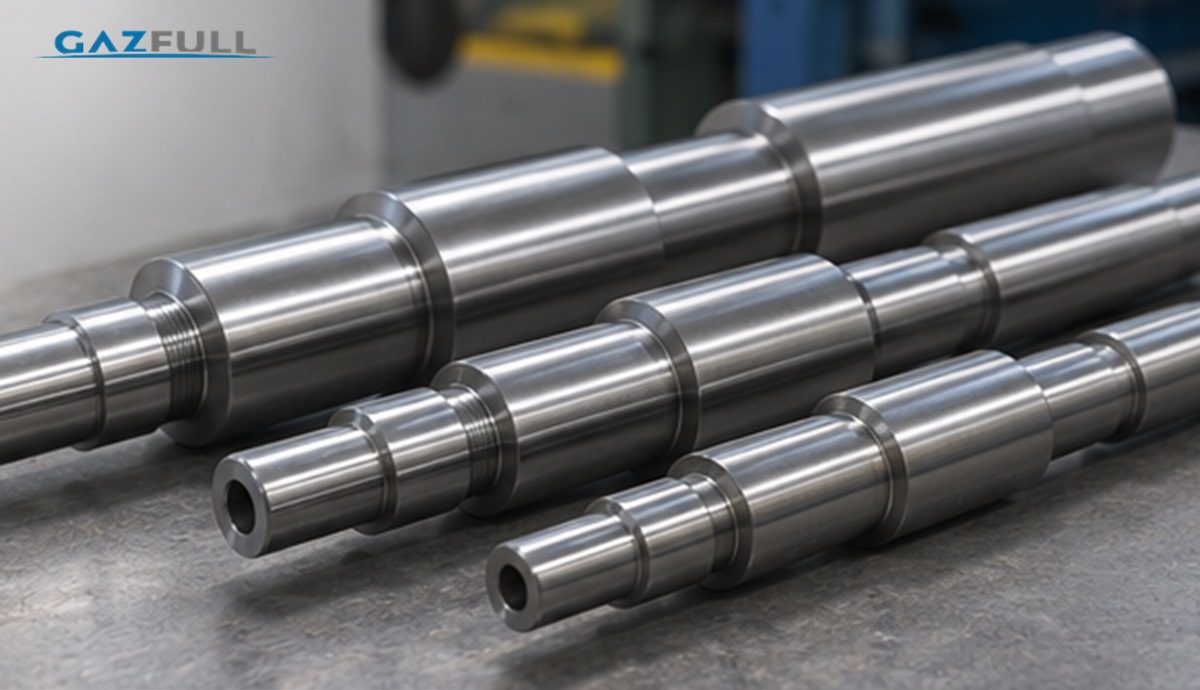
When drawings specify surface hardness above 50 HRC (such as case-hardened 8620 or through-hardened 4140 drive spindles) paired with Ra 0.2–0.4 µm bearing seats, we rough-turn leaving 0.15–0.25 mm grinding stock, perform controlled heat treatment, and finish bearing journals on a precision cylindrical OD grinder to eliminate any heat-treat distortion. Explore our dedicated precision CNC shafts capabilities for typical geometries.
2. Specifying Concentricity, ISO Bearing Fits, and Shoulder Reliefs
A common drawing mistake on rotating shafts is tolerancing individual diameters tightly (`Ø12.000 / 11.989 mm`) while omitting coaxial runout between the two bearing seats. Always establish a compound Datum A–B axis across the two primary bearing journals and apply a Total Indicator Runout (TIR) callout of 0.005 mm to 0.015 mm to gear seats, coupling diameters, and seal lands so our QC inspection mirrors real shaft rotation.
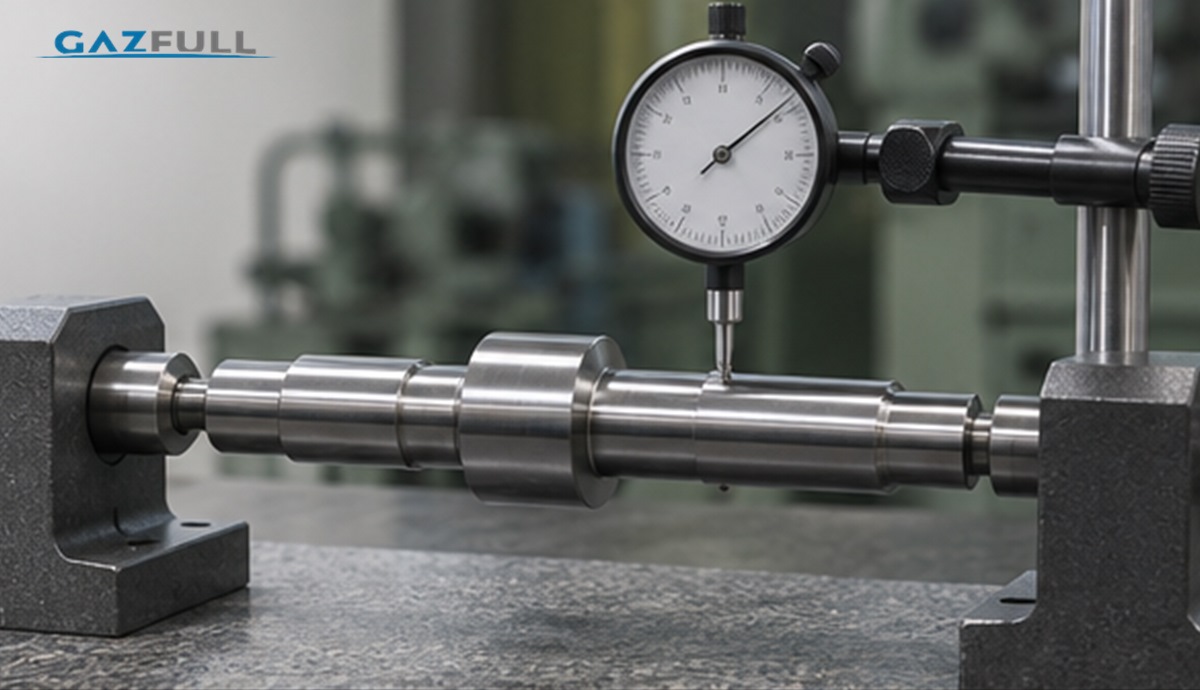
For bearing journals, use standard ISO fit classes—typically g6 or h6 for sliding/clearance bearing assembly and k5 or m5 for rotating inner-ring press fits. Equally important, include small DIN 509 grinding/turning relief undercuts (or R0.3–R0.5 mm recessed fillets) at stepped shaft shoulders so square-edged bearing races seat flush against axial locating shoulders without riding up on a tool nose radius. On dynamic elastomer oil-seal zones, specify Ra 0.4–0.8 µm plunge-ground or zero-lead finish so microscopic helical turning marks do not pump lubricant past the seal lip.
3. Material Selection: Stainless Steel, 4140 Alloy Steel, and Titanium
Choosing the right shaft alloy balances torsional strength, corrosion exposure, wear hardness, and CNC turning speed. For dry indoor sensors, couplings, and automation pins, free-machining 303 stainless steel runs nearly twice as fast as 316L and delivers crisp threads at the lowest stainless cost. For washdown, marine, or medical fluidics, 316L stainless steel resists chloride pitting reliably. When high torque and corrosion resistance are both required, 17-4PH precipitation-hardening stainless steel machines cleanly in Condition A and ages to ~40 HRC (H900) with 1,170 MPa yield strength and minimal distortion.
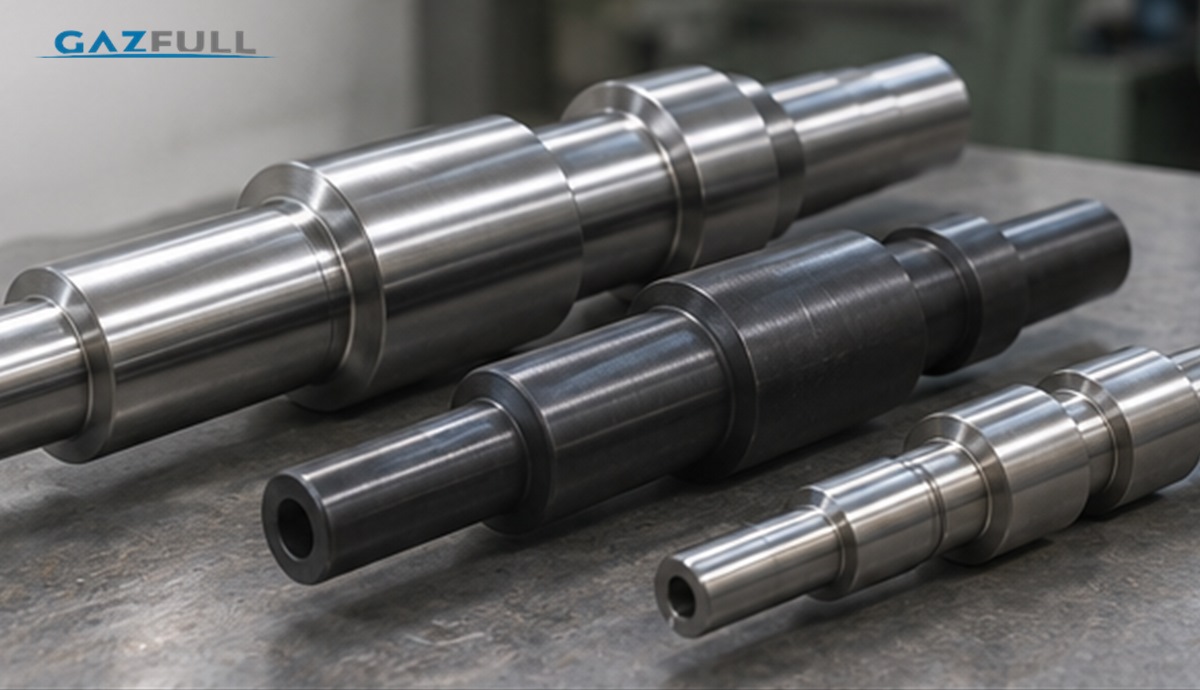
For heavy industrial drives, gearboxes, and automotive test shafts requiring high fatigue life, pre-hardened 4140 (42CrMo4) alloy steel (28–32 HRC) or induction-hardened journals deliver superior torsional stiffness at lower cost than stainless or titanium. When minimizing rotational inertia is mission-critical in robotics or aerospace, Ti-6Al-4V Grade 5 titanium offers 880 MPa yield strength at ~45% lower mass than steel. Compare stainless machinability details in our 304 vs. 316L vs. 303 stainless guide.
4. Concentricity Verification, Thread Gauging, and Protective Shipping
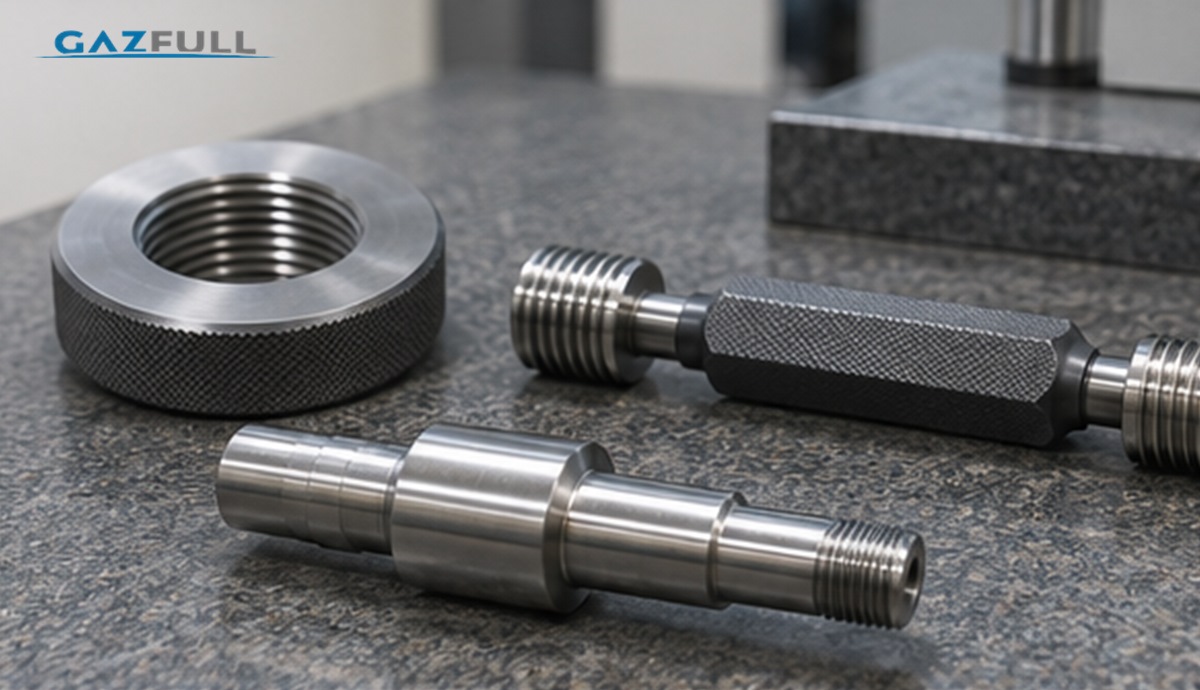
Every precision shaft lot in our workshop undergoes multi-stage verification: incoming centerless-ground h8/h9 bar stock inspection, in-process micrometer/air-gauge checks on bearing seats, V-block/CMM Total Indicator Runout (TIR) measurement across Datum A–B, and calibrated Go/No-Go ring gauging on all external threads. Because even a tiny nick on a precision bearing journal ruins assembly fit, finished shafts are ultrasonically cleaned, treated with light anti-rust oil or ASTM A967 passivation, and packed individually in protective plastic mesh sleeves or slotted foam tubes.
Frequently Asked Questions: Precision CNC Shafts
1. What concentricity (TIR) tolerance can Gazfull hold on custom CNC shafts?
We routinely hold 0.005 mm to 0.010 mm TIR on Swiss-turned and single-setup mill-turned shafts, and down to 0.003 mm TIR when critical bearing journals undergo post-heat-treat cylindrical OD grinding.
2. When should I use CNC Swiss turning instead of a conventional lathe for shafts?
Whenever shaft diameter is Ø32 mm or smaller and length exceeds 4× diameter (L:D > 4:1), Swiss turning eliminates bending deflection and delivers tighter concentricity and lower unit cost on batches of 50+ pieces.
3. Why do stepped shafts need shoulder relief undercuts?
Every turning insert has a small nose radius (typically R0.2–R0.4 mm). Adding a shallow undercut relief at the corner of a bearing shoulder lets a mating bearing or gear seat completely flush against the axial locating face.
4. Which stainless steel is best for high-torque rotating shafts?
17-4PH stainless steel (aged to H900 or H1025) delivers roughly 4× the yield strength of 304/316L while maintaining strong corrosion resistance and minimal heat-treat distortion.
5. Can you machine splines, keyways, and cross-holes on the same shaft?
Yes. Our live-tooling mill-turn centers and Swiss lathes machine keyways, D-flats, retaining-ring grooves, and radial cross-holes in the same setup as turning to protect angular and coaxial accuracy.
6. What packaging prevents precision shafts from getting dinged in international freight?
We sleeve every precision shaft individually in protective PE mesh netting or custom-slotted foam trays inside VCI anti-rust bags and reinforced export cartons.
Need High-Concentricity CNC Turned Shafts or Stepped Pins?
Send your 3D CAD models (STEP, IGES, X_T) and 2D PDF drawings to the Gazfull CNC engineering team today. We review Datum A–B runout, bearing fits, heat treatment, and Swiss vs. mill-turn routing—delivering your quote within 24 hours.