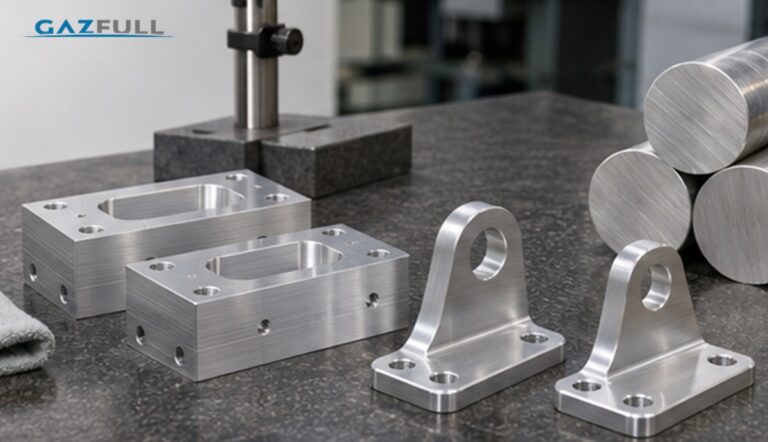
Aluminum alloys are the backbone of custom CNC machining—combining roughly one-third the weight of steel with rapid spindle removal rates, natural corrosion resistance, and versatile anodizing finishes. Yet engineers frequently struggle to choose among the three most requested commercial grades: 6061, 7075, and 5052. While 6061 and 7075 dominate billet milling, 5052 brings unmatched saltwater corrosion resistance and tight sheet-bending formability—along with much gummier CNC milling behavior that surprises buyers who specify it for deep-pocket housings. In this complete guide from our China CNC workshop, we compare 6061, 7075, and 5052 side by side so you specify the exact right alloy and temper for your part.
1. 6061-T6 vs. 7075-T6 vs. 5052-H32: Core Engineering Differences
Each of these three aluminum alloys belongs to a different metallurgical family designed for a distinct primary job. 6061-T6 (Al-Mg-Si) is the universal CNC workhorse balancing 276 MPa yield strength, fast cutting, TIG weldability, 167 W/m·K thermal conductivity, and uniform cosmetic anodizing. 7075-T6 (Al-Zn-Mg-Cu) is the high-strength structural specialist delivering 503 MPa yield strength and 150 HB hardness for compact robotics, UAV, and motorsport hardware, at roughly 2× raw billet cost and lower corrosion resistance. 5052-H32 (Al-Mg) is a non-heat-treatable, strain-hardened marine and sheet-forming alloy (193 MPa yield strength) that resists saltwater corrosion better than 6061 and bends cleanly without cracking—making it ideal for marine plates, chassis panels, and formed brackets rather than deep solid-billet milling.
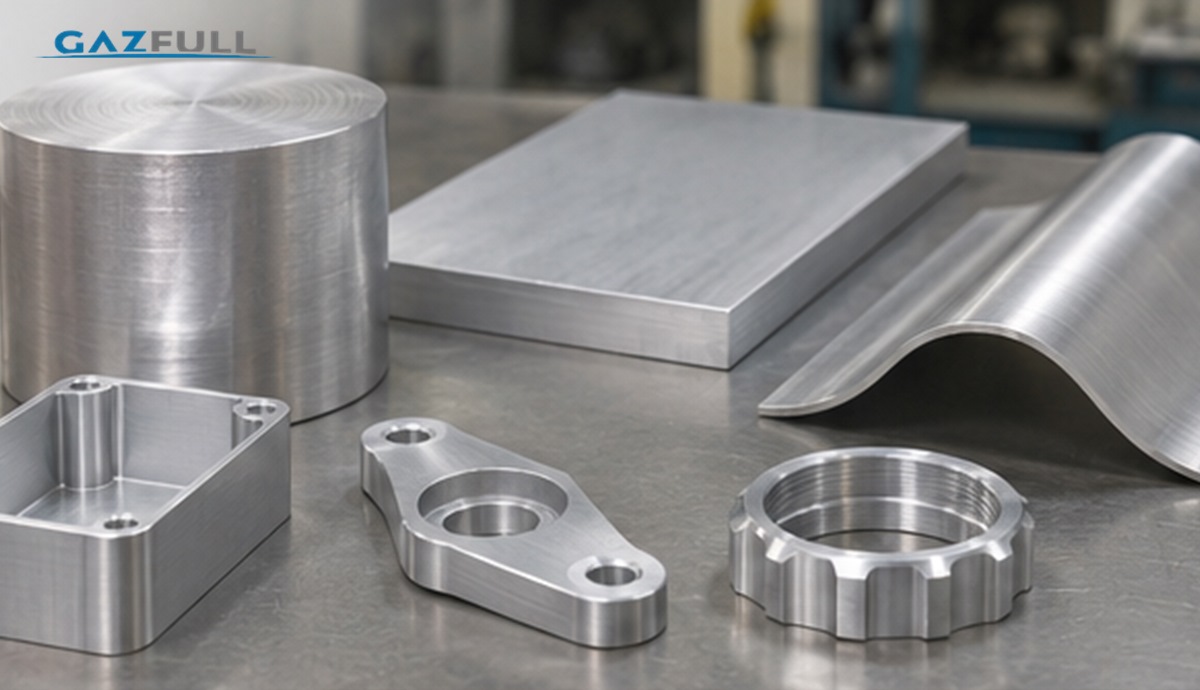
Explore our aluminum CNC machining and aluminum alloy CNC machining capability pages for stocked tempers and finishing options.
2. Balancing Yield Strength, Thermal Conductivity, and Formability
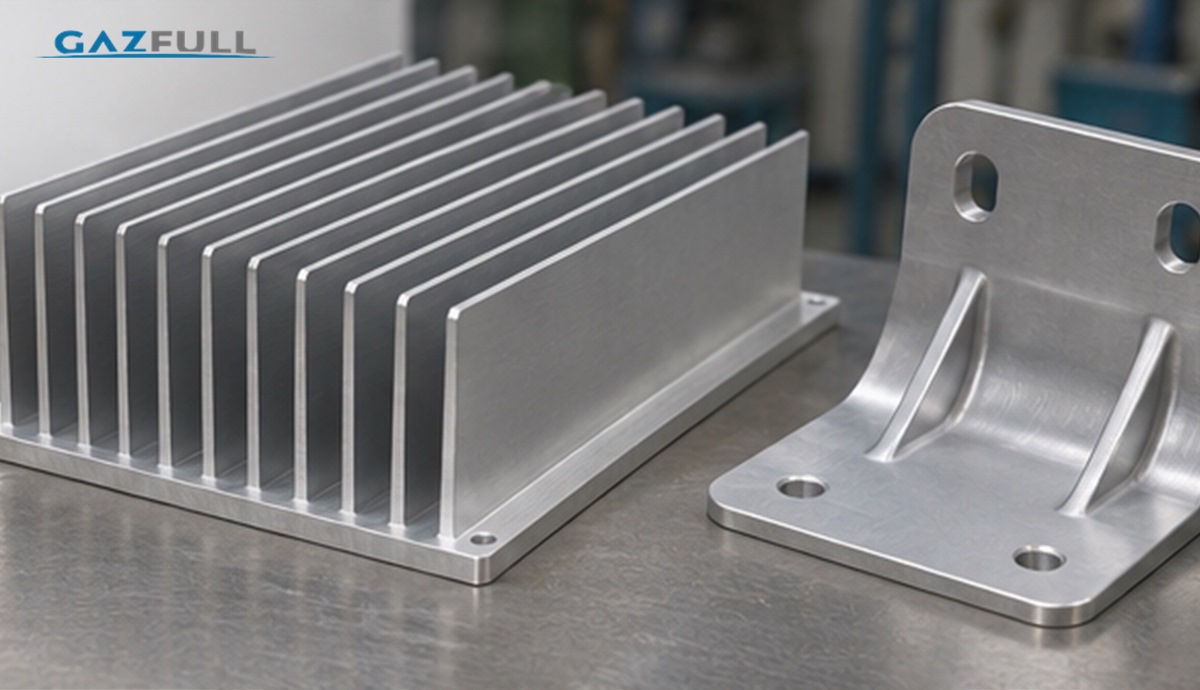
One of the most frequent engineering traps is assuming 7075 is superior in every metric because it is the strongest. In thermal management, 6061-T6 (167 W/m·K) outperforms both 7075-T6 (130 W/m·K) and 5052-H32 (138 W/m·K) by 21% to 28%, making 6061 the clear winner for CNC machined heat sinks and power electronics bases. Meanwhile, in tight-radius bending or saltwater marine exposure, 5052-H32 survives tight 1T bends without outer-radius cracking (where 6061-T6 fractures and 7075-T6 snaps immediately) and resists marine pitting even in bare form.
3. Shop-Floor Machining Reality: Chips, Warpage, and Anodizing
On our 3-axis and 5-axis CNC mills, alloy choice directly drives surface finish and cycle time. 7075-T6 produces the cleanest, shortest-breaking chips and razor-crisp edges, while 6061-T6 allows the highest bulk material removal rates with polished 3-flute carbide end mills. By contrast, 5052-H32 is noticeably softer and gummier—tending to smear burrs along thin slots and weld onto flutes unless run with sharp uncoated tools and flood coolant. For deep multi-pocket housings, 6061-T651 machines 25% to 40% faster and cleaner than 5052.
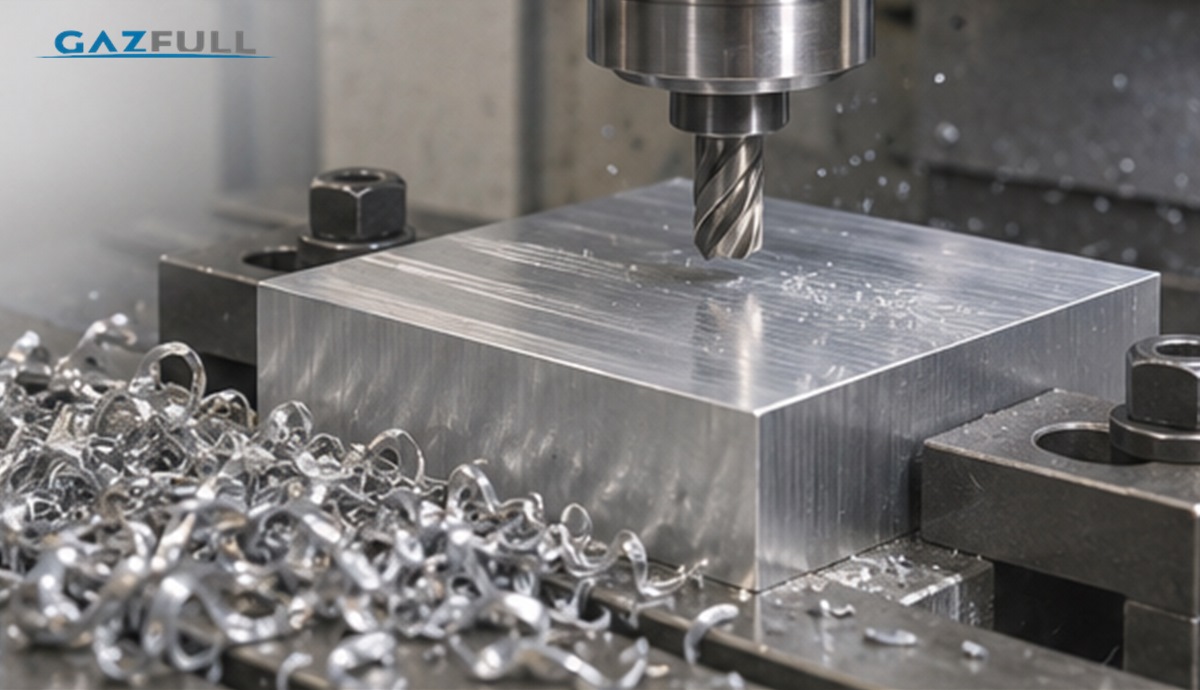
For flatness tighter than 0.05 mm on milled enclosures or optical plates, specify stress-relieved 6061-T651 or 7075-T651 plate. And remember our golden anodizing rule: never mix 6061, 7075, and 5052 parts inside the same cosmetic anodized assembly if visual color uniformity matters, as each alloy’s copper/magnesium chemistry shifts dye tone slightly.
4. Four-Step Selection Flow: Picking 6061, 7075, or 5052 Fast
Use this rapid four-step engineering check before releasing your drawing: (1) If FEA shows localized stress above 200 MPa inside a fixed space envelope, choose 7075-T651; (2) If the part requires tight sheet-metal bending or bare marine saltwater resistance, choose 5052-H32; (3) If the part is a general housing, heat sink, optical mount, fixture, or welded assembly, choose 6061-T651; (4) Confirm exact temper and EN 10204 3.1 mill certificates upfront in your RFQ. For a deeper head-to-head on 6061 vs. 7075 metallurgy, read our 6061 vs. 7075 aluminum comparison.
Frequently Asked Questions: 6061, 7075, and 5052 Aluminum CNC Machining
1. Why is 5052 aluminum harder to CNC mill than 6061?
Because 5052-H32 is softer and more ductile than age-hardened 6061-T6, it produces long gummy chips and heavier burrs during deep pocketing, requiring slower feeds and extra deburring. Reserve 5052 for flat marine plates, covers, and bent sheet-metal brackets.
2. Can 5052 aluminum be heat-treated to T6 like 6061?
No. 5052 is a 5xxx-series magnesium-alloyed aluminum that cannot be precipitation heat-treated; its strength comes strictly from cold work hardening (H32, H34 tempers).
3. Which of the three alloys has the best saltwater corrosion resistance?
5052-H32 offers the highest marine and saltwater corrosion resistance due to its magnesium content and absence of copper, followed closely by 6061-T6. 7075-T6 has the lowest natural corrosion resistance and should always be anodized or chromated in humid environments.
4. Which alloy is best for matte black anodized enclosures?
6061-T6 / T651 delivers the cleanest, deepest, and most batch-consistent matte black Type II anodizing after fine glass-bead blasting.
5. Can 6061, 7075, and 5052 all be welded after CNC machining?
6061 and 5052 weld cleanly via TIG and MIG processes (using 4043 or 5356 filler). 7075 is prone to severe hot cracking and should not be structurally welded.
6. Does Gazfull stock 6061-T651, 7075-T651, and 5052-H32 with material certificates?
Yes. We stock all three alloys in standard plate and bar sizes in our China facility and provide EN 10204 3.1 Material Test Reports (MTRs) on request.
Ready to Quote Your 6061, 7075, or 5052 Aluminum CNC Parts?
Send your 3D CAD models (STEP, IGES, X_T) and 2D PDF drawings to the Gazfull CNC engineering team today. We verify alloy suitability, T651 flatness, and anodizing tolerances—delivering your quote within 24 hours.